NeuroStar® Advanced TMS Therapy for DepressionFeel like you again.
FDA-cleared, drug-free depression treatment in Bellevue, WA
When antidepressants haven’t been enough, there’s another path forward. NeuroStar® TMS is an FDA-cleared, drug-free treatment that works directly on the brain circuits involved in mood. You stay awake, sessions take less than 20 minutes, and you can drive yourself home.
- FDA-cleared and drug-free
- No systemic side effects
- Covered by most insurance plans
- Free insurance verification

FDA-Cleared · Non-Drug

Patient GuideGet the free guide
How it works
What is NeuroStar® TMS therapy, and how does it work?
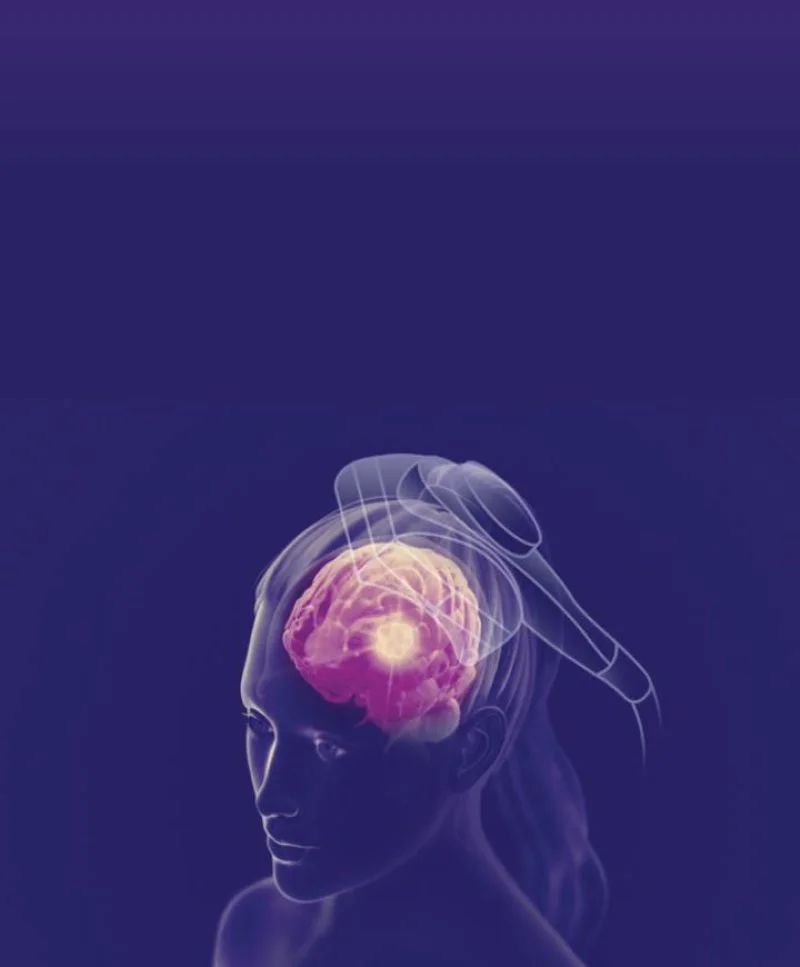
NeuroStar® TMS (transcranial magnetic stimulation) treats depression by reactivating a key part of the brain that controls mood.
When you’re depressed, the left prefrontal cortex, one of the brain’s main mood centers, becomes underactive. That’s part of why life can feel heavy, flat, or out of reach. NeuroStar® sends focused magnetic pulses, about the strength of an MRI, to that exact spot to bring it back online. Nothing travels through the rest of your body.
Think of it as physical therapy for your mood. Each session strengthens the brain’s mood network, and over a few weeks many people find the color coming back into their days.
Watch how TMS works and what treatment feels like
Pulses wake up underactive cells
The coil creates a focused magnetic field. It gently activates neurons in the brain’s mood-regulating area, so they start firing again.
Repetition builds stronger connections
Daily sessions tap into neuroplasticity, your brain’s natural ability to rewire. The effect spreads to deeper regions that shape mood, sleep, and motivation.
You start feeling like yourself again
Within weeks, many people sleep better and have more energy. Then their mood begins to lift. Because TMS changes how the brain works instead of masking symptoms, results can last.
As seen on FOX13 Seattle
Our Bellevue TMS program on FOX13 News Tonight
FOX13 visited our clinic to show how NeuroStar® TMS helps people across Seattle and the Eastside when medication alone hasn’t been enough.
Is TMS right for me?
Who is a good candidate for TMS?
Ask yourself:
- Have you taken more than one antidepressant?
- Have medications failed to give you enough relief?
- Do side effects feel worse than the benefit?
- Is depression getting in the way of work, school or relationships?
- Does depression still have too much control over your life?
If you answered yes to any of these, TMS may be an option for you.
NeuroStar® is cleared for adults and for teens 15 and older. TMS isn’t used for people with non-removable metal in or near the head, such as aneurysm clips or cochlear implants. Braces and fillings are usually fine.
Cost & coverage
Is TMS covered by insurance? For most people, yes.
Most major health plans cover NeuroStar® TMS therapy for depression, including Premera Blue Cross, Regence, Aetna, United Healthcare, Kaiser Permanente, and TRICARE.
Our team takes care of the insurance work for you, from verifying your benefits to securing prior authorization, so you can put your energy into feeling better.
You’ll know what’s covered before your first session.
Prefer not to use insurance? We offer private-pay options, with transparent self-pay rates we can go over before you schedule.



Patient stories
Hear from real NeuroStar® TMS patients
Choosing a treatment for depression is a personal decision. Hear directly from real NeuroStar® TMS patients as they share their experiences, what treatment was like, and how it impacted their lives.
Debbie’s TMS journey
Todd’s TMS journey
Carol’s TMS journey
Your path to treatment
What to expect, from first call to final session
We keep the steps simple and handle the paperwork, so you can put your energy into feeling better.
Free consultation
A short, no-pressure conversation by phone or in person. We’ll listen to what you’ve been through and answer your questions about TMS.
Evaluation and insurance approval
An evaluation with a provider confirms whether TMS is right for you. Meanwhile, we verify your benefits and submit prior authorization, so you know what’s covered before you start.
Your mapping session
At your first appointment, we pinpoint your treatment location and calibrate the stimulation to you. The visit takes about an hour and includes your first treatment.
Short, regular sessions
A full course of treatment is 36 sessions, each under 20 minutes. We recommend five a week, but can accommodate as few as three, scheduled around your week. You can watch a show, listen to music, or simply relax, then head straight back to your day.
Progress checks along the way
We track your symptoms with standard depression scales, so you can see progress even on days it’s hard to feel. Your ongoing psychiatric care stays with the same team.
What a session feels like
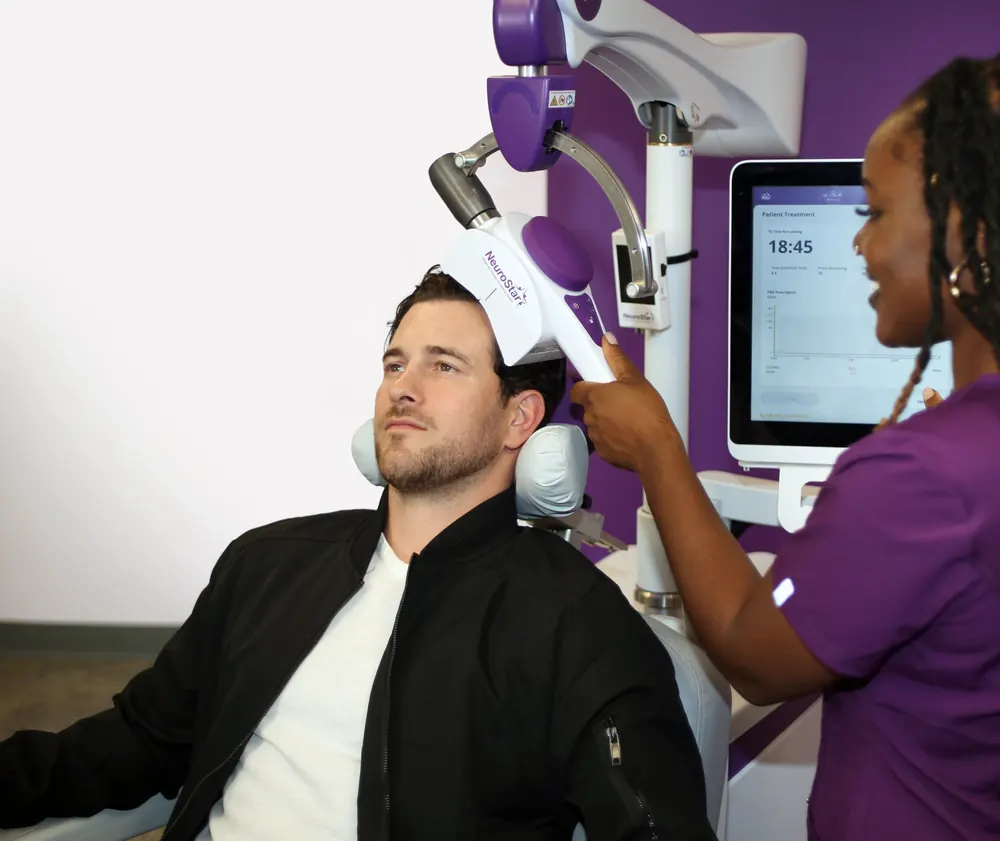
Sit back and relax
You recline in a comfortable chair in a private room. No needles, no sedation, no changing clothes.
Feel a steady tapping
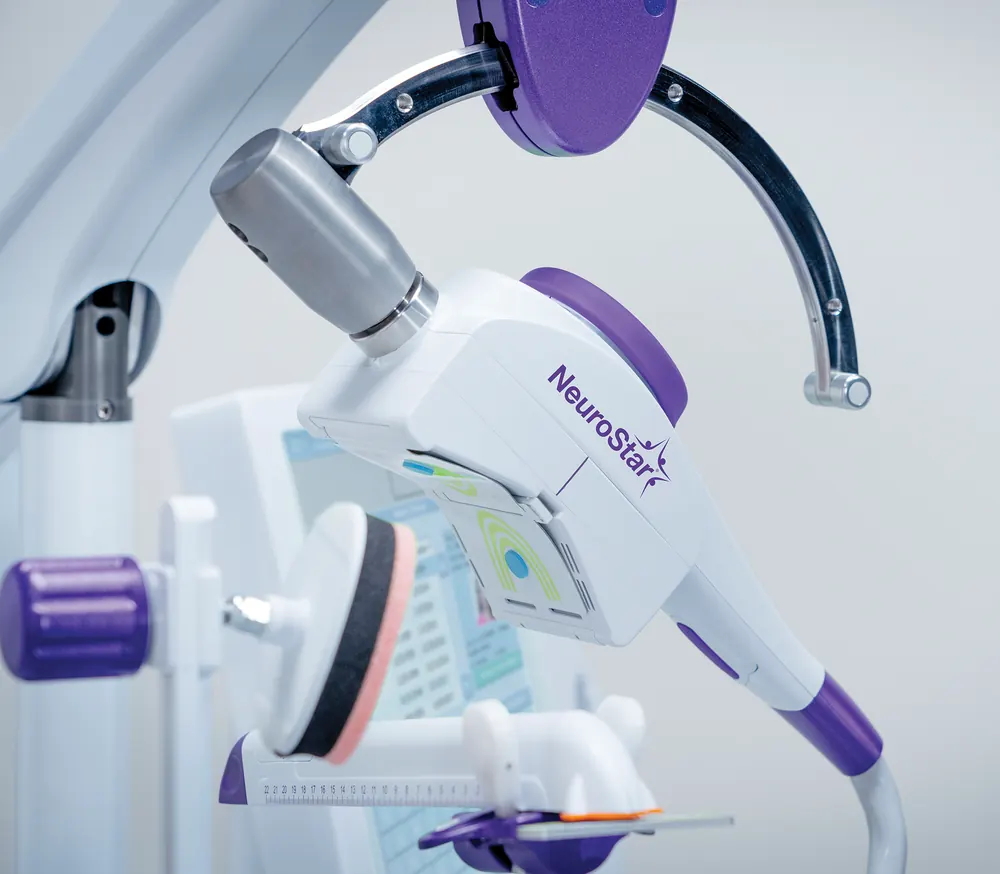
The coil clicks and taps on your scalp. You can talk, watch a show or listen to music. Earplugs are provided.
Get back to your day
When it’s done, you’re done. Drive yourself home, to work or to school.
The same faces every day
Our NeuroStar®-certified technicians get to know you. Seeing a friendly, familiar team is part of what makes daily visits easier.
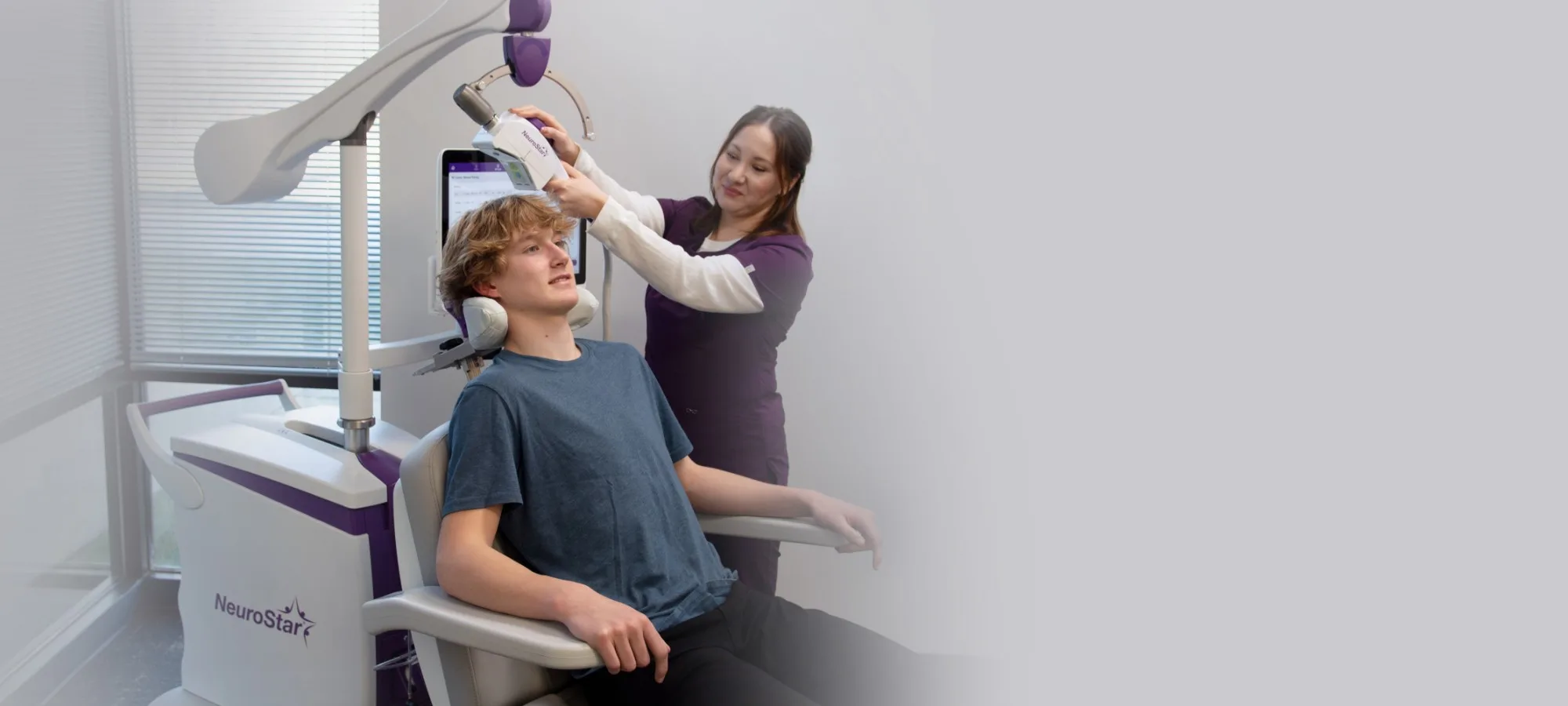
For teens ages 15+
FDA-cleared TMS therapy
for adolescents
When a teenager’s depression hasn’t improved enough with medication, NeuroStar® can be added to their treatment. In 2024 it became the first TMS therapy FDA-cleared for teens and young adults ages 15 to 21. In real-world data, 78% saw meaningful improvement in their depression. Sessions are short enough to fit before or after school, there’s no sedation, and your teen can head straight back to class or practice.
Schedule a free TMS consultationIf you’re tired of trying
Why another antidepressant isn’t always the answer
Maybe you’ve tried two, three, or more medications. Some barely helped. Some came with side effects that made life harder: weight gain, feeling flat, poor sleep, low sex drive. And each new prescription meant waiting weeks to find out.
That pattern is common, and research explains it. In STAR*D, the largest real-world study of depression treatment, the chance of full remission dropped sharply with each new medication step.
When pills keep falling short, a treatment that works a different way makes sense. That’s where TMS comes in.
Remission with each medication step
STAR*D trial, 3,671 outpatients with depression
Rush AJ, et al. Acute and longer-term outcomes in depressed outpatients requiring one or several treatment steps: a STAR*D report. Am J Psychiatry. 2006;163(11):1905–1917. The 2nd–4th medications were either a switch or an added medication.
Not all TMS is the same
Why we chose NeuroStar® Advanced Therapy
Not every TMS machine is backed by the same evidence. When we chose a TMS system, we had one goal: to give every patient the best possible chance of getting well. That’s why we chose NeuroStar®, the first TMS system FDA-cleared for depression and the most studied, with real-world results to prove it.
NeuroStar® is the #1 physician-recommended TMS system§
The numbers behind NeuroStar®
83%†of patients who completed treatment experienced relief from symptoms
250,000+patients treated with NeuroStar® Advanced TMS
65+‡clinical studies behind its safety and results
A proven safety record
9 million+
NeuroStar® treatments delivered in everyday practice
- No systemic side effects: no weight gain, sexual side effects or drowsiness
- You stay awake, with no anesthesia, and can drive yourself home
- Seizure is rare, at less than 0.1% per patient
NeuroStar® firsts and facts
- 1stTMS system FDA-cleared for depression, in 2008
- 1stTMS system cleared for teens ages 15–21, in 2024
- 4FDA-cleared uses: adult depression, anxiety symptoms with depression, adult OCD (add-on) and teen depression (add-on)
- #1Largest clinical data set of any TMS system for depression, and the world’s largest depression outcomes registry
†Clinician-rated (CGI-S) outcomes for patients who completed an acute NeuroStar® course in the NeuroStar® Outcomes Registry; other treatments, including medication, were allowed. Patient-rated (PHQ-9) response and remission were 69% and 36%. Sackeim HA, et al. J Affect Disord. 2020;277:65–74.
‡Neuronetics, data on file, as published at neurostar.com. Patient and treatment counts are also from neurostar.com. Individual results vary.
§As stated by Neuronetics, maker of NeuroStar®, at neurostar.com.
Questions
NeuroStar® Advanced TMS Therapy FAQs
Does TMS therapy hurt?
Most people describe it as a firm tapping on the scalp. Some feel scalp discomfort or a mild headache during the first week, and it usually fades as treatment continues. We can adjust settings for your comfort. No anesthesia or sedation is needed.
How long until I notice a difference?
Some people notice changes such as better sleep, more energy or a lighter mood within the first two to four weeks. Others improve later in the course. Because TMS works by strengthening brain networks over time, finishing the full course matters.
Is TMS the same as ECT or shock therapy?
No. TMS uses focused magnetic pulses, not electric current through the brain. You stay awake, there is no anesthesia, no seizure is induced, and TMS does not affect memory. You can drive yourself to and from every session.
Can I keep taking my antidepressant during TMS?
Usually, yes. TMS can be used alongside medication and talk therapy. Your provider will review your current medications during your evaluation and coordinate your plan.
What are the side effects of NeuroStar® TMS?
The most common side effect is temporary pain or discomfort at or near the treatment site, mostly during the first week. TMS has none of the weight gain, sexual side effects or drowsiness that some antidepressants cause. Seizure is rare, at less than 0.1% per patient.
How many TMS sessions will I need?
A full TMS Therapy course is 36 sessions, and each session takes less than 20 minutes. We recommend five sessions a week, but can also accommodate as few as three a week. In some cases, insurance plans approve more than one session in a day, which can help you finish sooner. We work with your schedule to find session times that fit your life.
Is TMS covered by insurance?
Most major insurance plans and Medicare cover TMS for depression when medical criteria are met, often after trying antidepressants without enough relief. Our team verifies your benefits and handles the prior authorization for you before treatment begins, so you’ll know your expected costs up front.
Can teenagers get TMS?
Yes. In 2024 NeuroStar® became the first TMS system FDA-cleared as an add-on treatment for depression in adolescents ages 15 to 21. We see teens and their families for a full evaluation first.
Does TMS help anxiety or OCD?
NeuroStar® is FDA-cleared to decrease anxiety symptoms in adults with depression who also have anxiety and haven’t improved enough with antidepressant medication, and as an add-on treatment for adults with obsessive-compulsive disorder. Your evaluation will show whether TMS fits your situation.
Can I drive and go to work after a session?
Yes. TMS does not affect alertness or memory, so most people drive themselves and go straight back to work, school or home. There is no recovery time.
Who should not have TMS?
TMS is not right for people with non-removable conductive metal in or near the head, such as aneurysm clips, cochlear implants or certain stimulators. Braces and dental fillings are usually fine. A history of seizures needs careful review. Your evaluation covers all of this.
How is NeuroStar® different from other TMS machines?
NeuroStar® was the first TMS system FDA-cleared for depression, in 2008, and in 2024 became the first cleared for adolescents ages 15 to 21. It has the largest clinical data set of any TMS system for depression, including a real-world registry of thousands of patients and published 12-month follow-up data.
Have a question that isn’t here?
Call or text us, there’s no wrong question.
Free TMS consultation
Request your free consultation
Tell us how to reach you, and our care team will contact you to schedule a free, no-obligation TMS consultation.
- No cost and no commitment
- We verify your insurance for you
- A short conversation by phone or in person
Prefer to talk now? Call (425) 300-9555.

Free patient guide
Download our free
NeuroStar® Advanced TMS patient guide
Our guide explains TMS in plain language, for adults and for teens 15 and older, so you can read it at your own pace and share it with someone you trust.
- How TMS works and what it feels like
- A week-by-week look at the 36 sessions
- How insurance approval works
- Questions to bring to your consultation
Prefer NeuroStar®’s own brochures? Download the brochure for adults (PDF, 1.4 MB) or for teens, ages 15 to 21 (PDF, 2.1 MB). Need the guide in another format? Call or text (425) 300-9555.
Indications & important safety information
Adult Indications for Use
The NeuroStar Advanced Therapy System is indicated for the treatment of depressive episodes and for decreasing anxiety symptoms for those who may exhibit comorbid anxiety symptoms in adult patients suffering from Major Depressive Disorder (MDD) and who failed to achieve satisfactory improvement from previous antidepressant medication treatment in the current episode.
The NeuroStar Advanced Therapy System is intended to be used as an adjunct for the treatment of adult patients suffering from Obsessive Compulsive Disorder (OCD).
Adolescent Indications for Use
NeuroStar Advanced Therapy is indicated as an adjunct for the treatment of Major Depressive Disorder (MDD) in adolescent patients (15-21).
Important Safety Information
NeuroStar Advanced Therapy is only available by prescription. A doctor can help decide if NeuroStar Advanced Therapy is right for you. Patients’ results may vary.
The most common side effect is pain or discomfort at or near the treatment site. These events are transient; they occur during the TMS treatment course and do not occur for most patients after the first week of treatment. There is a rare risk of seizure associated with the use of TMS therapy (<0.1% per patient).
Visit neurostar.com for full safety and prescribing information.
References
- Sackeim HA, et al. Clinical outcomes in a large registry of patients with major depressive disorder treated with transcranial magnetic stimulation. J Affect Disord. 2020;277:65–74.
- Rush AJ, et al. Acute and longer-term outcomes in depressed outpatients requiring one or several treatment steps: a STAR*D report. Am J Psychiatry. 2006;163(11):1905–1917.
- Dunner DL, et al. A multisite, naturalistic, observational study of transcranial magnetic stimulation for patients with pharmacoresistant major depressive disorder: durability of benefit over a 1-year follow-up period. J Clin Psychiatry. 2014;75(12):1394–1401.
- Neuronetics. NeuroStar Advanced Therapy receives FDA clearance as a first-line add-on treatment for adolescents with depression. March 25, 2024.
- NeuroStar. Is NeuroStar safe and proven? neurostar.com, accessed October 2026.
Medically reviewed by Melissa Mason-Elison, PMHNP-BC · Last reviewed October 8, 2026